
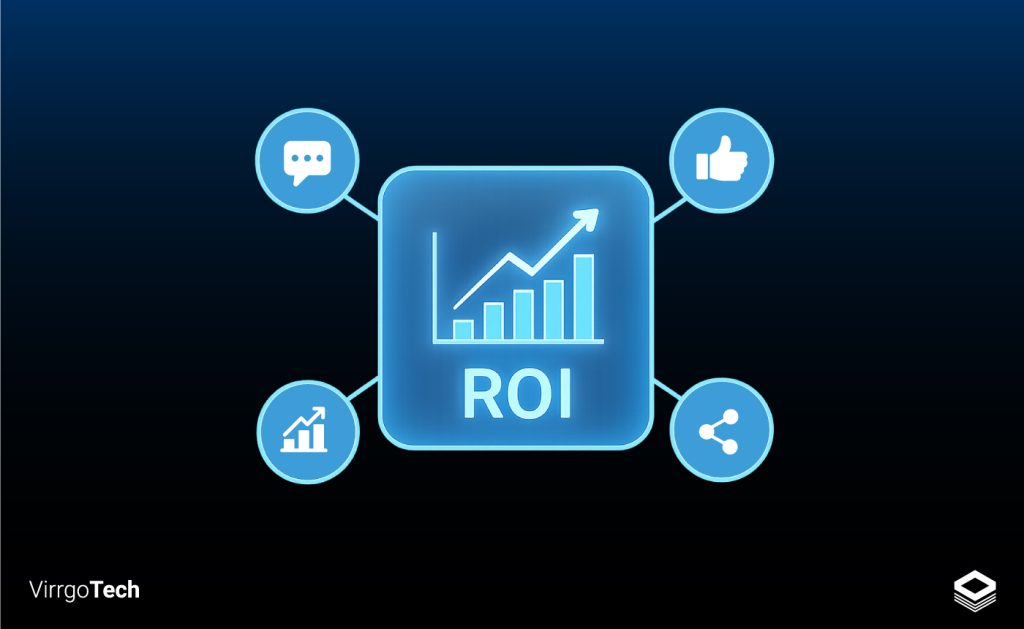
Social media ROI remains one of the most challenging and under-measured aspects of digital marketing performance.
Every brand knows that social media drives awareness, engagement, and conversation, yet when it’s time to connect those results to revenue, things often get blurry.
Part of the problem is that social platforms were never built for traditional ROI tracking. They’re fast-moving, community-driven spaces where many interactions don’t fit neatly into spreadsheets.
Marketers often end up juggling vanity metrics, such as comments, likes, and shares, that look impressive on paper but say little about real business impact.
Then there’s the issue of fragmented data. Each platform has its own analytics, attribution logic, and engagement signals. Stitching all of that together into a single, meaningful picture of performance can feel like solving a puzzle with half the pieces missing.
That’s exactly why a practical social ROI framework matters more than ever. Businesses need a structured way to track what truly counts, not just how many people saw a post, but how that interaction contributed to awareness, leads, or sales.
By the end of this blog post, you’ll have a clear understanding of how to track social media ROI from the ground up, and how to connect your marketing efforts to outcomes that actually move the needle.
Let’s get started!
What is Meant by Social Media ROI?
Before diving into frameworks and metrics, it’s important to pause and define what social media ROI actually means because this is where many marketers get tripped up.
Simply put, social media ROI is the measurable return your brand gets from social activities compared to what you’ve invested, whether that investment is time, money, or creative effort.
It’s the answer to the question: “What value are we really getting from our social presence?”
Now, here’s where it gets interesting: social ROI isn’t identical to general marketing ROI. Traditional ROI often focuses purely on revenue or cost savings. Social media, however, works differently; it builds relationships, not just transactions. A campaign that doesn’t instantly convert can still be laying the groundwork for future sales by increasing trust, engagement, and awareness.
And that’s why measuring social media ROI can’t be limited to dollars and cents. The impact of social media often shows up in indirect ways like improved brand sentiment, stronger customer retention and loyalty, better reach quality, or even richer audience insights. These are long-term value drivers that traditional metrics can easily overlook.
[Also Read: How to Quantify Brand Awareness: Insights & Key Indicators]
Take this simple example: imagine running two campaigns. One is a paid ad that directly drives product purchases. The other is an organic storytelling campaign that sparks authentic conversations and boosts your brand’s reputation.
The first may deliver immediate revenue, but the second builds brand trust, and that trust fuels every future sale.
Building Blocks of a Social Media ROI Framework
Now that we’ve defined what social ROI really means, the next step is figuring out how to measure it consistently and meaningfully.
That’s where we need a strong framework (a repeatable structure that connects your goals, metrics, and outcomes in a way that actually makes sense for your business). You can consider it your roadmap for tracking social media ROI; something you can rely on to cut through vanity metrics and focus on what truly drives growth.
Here are the most crucial elements of this framework:
Goal Setting: Start With Business Impact in Mind
Every effective ROI framework starts with clarity. Before you track or measure anything, ask: What are we really trying to achieve?
Your social media marketing ROI should always ladder up to broader business goals, not just engagement spikes or follower counts. For example:
- Brand Awareness: Expanding visibility and reach among new audiences.
- Lead Generation: Turning social engagement into qualified prospects.
- Customer Retention: Building ongoing loyalty and advocacy.
When goals align with real business outcomes, every social effort starts to have a purpose beyond numbers.
Metric Selection: Measure What Matters
Once your goals are clear, the next step is choosing the right KPIs (Key Performance Indicators) for each stage of the funnel. A common mistake many marketers make is using the same metrics for all stages, which can obscure the true performance.
Here’s a simple breakdown:
- Top of the Funnel: Impressions, reach, engagement rate.
- Middle of the Funnel: Click-through rate (CTR), lead conversion rate, cost per lead.
- Bottom of the Funnel: Sales conversions, customer acquisition cost, sentiment score.
By mapping metrics to intent, you make measuring social media ROI a lot more actionable and less about surface-level success.
[Also Read: Defining the Consumer Experience: From First Impressions to Feedback]
Data Sources: Go Beyond Platform Analytics
To get a full picture, you need to connect data from multiple touchpoints. Analytics tools (like Meta Insights or X Analytics) are great for engagement insights, but they don’t tell you what happens after someone clicks through.
Combine them with:
- Google Analytics for web traffic behavior.
- UTM tracking for campaign-level attribution.
- CRM data for lead quality and lifetime value.
This blended approach helps you see the entire customer journey, not just the last interaction, and makes ROI tracking much more accurate.
Attribution Models: See the Bigger Picture
Finally, attribution is where many frameworks either make or break. Relying solely on last-click attribution (crediting the final touchpoint) often paints an incomplete story.
Instead, experiment with multi-touch attribution models that recognize every step a user takes before converting, from seeing an ad to engaging with a post to finally making a purchase.
This approach gives you a more realistic sense of how your social channels work together, and it prevents underestimating the true value of social ROI.
Remember, a strong framework doesn’t just measure, it guides.
With clear goals, relevant metrics, and connected data, you’ll have a system that translates social efforts into meaningful business outcomes. For more insights, read our detailed blog on 5 Ways to Level Up Your Digital Marketing Game here.
Measuring the Success of Social Media Campaigns
Once the framework is in place, it’s time to move from theory to execution.
This is where measuring social media ROI becomes less about abstract ideas and more about tangible, data-driven insights. The real goal here is to understand how and where it drives impact across your marketing funnel.
Let’s break down the most effective, practical methods for tracking ROI on social media that go beyond vanity numbers and tell real value.
Conversion Tracking and UTM Parameters
If there’s one foundational tool for ROI measurement, it’s the UTM (Urchin Tracking Module) code. By adding unique UTM parameters to your links, you can trace exactly where your traffic, leads, and conversions are coming from.
For example, if you’re running a paid campaign on LinkedIn and an organic push on Instagram, separating UTMs for each helps you see which channel actually drives high-quality conversions.
When linked with Google Analytics or your CRM system, UTM tracking turns raw engagement into measurable business data, bridging the gap between content and revenue.
Pro tip: Always create a standardized UTM naming convention to keep your reporting clean and reliable across campaigns.
Multi-Channel Attribution and Assisted Conversions
Social media doesn’t always close the deal, but it often starts the conversation.
That’s why relying only on last-click conversions can lead to undervaluing your social media marketing ROI.
With multi-channel attribution, you can see how social platforms contribute at different stages of the customer journey. Maybe your Twitter campaign sparked interest, but the final purchase came through an email reminder. In this case, both channels deserve credit.
Platforms like Google Analytics 4 and HubSpot make it easier to track these assisted conversions, showing the unseen influence of social content in driving long-term results.
In short, social media might not always be the finisher, but it’s almost always part of the play.
Sentiment and Engagement Quality
Here’s the thing: not every valuable metric is numerical. Sentiment analysis (tracking how audiences feel about your brand) is also a critical part of measuring social media ROI, especially for long-term brand health.
Look beyond likes and impressions. Instead, pay attention to:
- The tone of comments and mentions (positive, neutral, or negative)
- The ratio of meaningful interactions (shares, saves, thoughtful replies)
- Emerging themes in audience feedback
These qualitative signals offer context behind the numbers, showing whether your campaigns are fostering trust and advocacy or just fleeting attention.
Tools like Brandwatch, Sprout Social, and Talkwalker help you measure sentiment and engagement quality at scale, turning emotional resonance into actionable insight.
Cost per Action (CPA) and Return per Post (RPP)
Finally, let’s put some math behind your social strategy. Cost per Action (CPA) tells you how much you’re spending for every desired outcome; whether that’s a click, a lead, or a sale. It’s a straightforward indicator of campaign efficiency.
Meanwhile, Return per Post (RPP) is a newer yet powerful metric that evaluates how much return each piece of content generates. It’s especially helpful when you’re balancing organic and paid content strategies.
Together, CPA and RPP help you understand not just if your campaigns are working, but which ones are driving the highest returns. They transform everyday posting into a measurable, performance-oriented activity.
When used together, these methods give you a 360° view of your social media marketing ROI, blending quantitative precision with qualitative understanding.
[Also Read: Instagram Marketing: Reasons To Use Instagram for Your Business]
Tools and Techniques for Tracking ROI on Social Media
Having the right tools makes tracking social ROI not only easier but also far more accurate.
Below are the best tools that will help you translate that data into insights you can act on:
Google Analytics: The Foundation of ROI Tracking
For most marketers, Google Analytics remains the go-to platform for understanding how social media drives real business outcomes. Features like Behavior Flow and Assisted Conversions show how users move through your website after engaging with a post or ad. This helps you see the complete customer journey. It’s one of the most effective ways to measure social media ROI beyond surface-level metrics like likes or impressions.
Meta Business Suite: Social Data That Tells a Story
When it comes to social media marketing ROI, Meta Business Suite (for Facebook and Instagram) gives you deep insight into engagement, reach, and conversion data. You can track which campaigns are generating clicks, which creatives spark the most interaction, and how those results align with your business goals. In short, it connects the dots between awareness and action.
Hootsuite, Sprout Social, and Buffer: Aggregated Insights
If you manage multiple platforms, tools like Hootsuite, Sprout Social, and Buffer can simplify the process. They consolidate data from all your social channels into one clean dashboard, so you can spot performance patterns and trends instantly. These tools also make tracking ROI on social media more manageable for busy teams juggling multiple campaigns.
CRM Integration: Closing the Loop Between Social and Sales
To take your measurement a step further, connect your social efforts with your CRM system. Platforms like HubSpot or Zoho CRM allow you to trace leads and sales back to specific social interactions. This level of integration is where social ROI becomes truly meaningful because you’re linking engagement metrics to actual revenue or customer retention.
Automating and Visualizing Data for Clearer Insights
Finally, consistency is key. Automating your reporting process ensures your ROI data stays fresh and reliable. Tools like Google Data Studio or Power BI can help visualize these insights through easy-to-read dashboards, perfect for presenting results to executives or even clients.
[Also Read: Social Media SEO: Essential Tips Every Marketer Must Follow]
Common Pitfalls When Measuring Social ROI
Even the most experienced marketers can stumble when it comes to measuring social media ROI.
The good news?
Most of these mistakes are easy to fix once you know what to look out for. Let’s break it down for you.
- Focusing Too Much on Vanity Metrics
Numbers like followers, likes, and impressions may look impressive, but they don’t always reflect real business impact. Instead of chasing surface-level engagement, focus on meaningful indicators such as conversions, click-through rates, or engagement quality.
- Inconsistent Tracking Across Campaigns
One of the biggest roadblocks to tracking social media ROI is inconsistency. When every campaign uses different metrics, it’s hard to compare results or identify trends. Establishing a uniform tracking framework, where metrics and UTM structures remain consistent, ensures your data tells a coherent story across platforms and timeframes.
- Not Comparing ROI Across Channels
Measuring ROI in isolation can lead to missed insights. Each social platform plays a unique role in the customer journey, and one channel’s performance often influences another’s. By comparing ROI across all platforms, you gain a holistic view of how your social ecosystem performs collectively, revealing which channels deliver the best balance of cost and return.
- Ignoring Indirect Value
ROI on social media isn’t always about immediate sales. Often, the true value lies in customer retention, referrals, or earned media exposure that builds long-term brand equity. Tracking repeat customers or referral traffic helps capture this indirect yet powerful side of social ROI that’s often overlooked.
The Bottom Line
Measuring social media ROI isn’t just about proving that your marketing efforts are working; it’s about learning how to make them work better. Every insight you gather, every pattern you identify, and every improvement you make feeds into smarter, more efficient strategies over time.
The key is to start small and stay consistent. You don’t need a massive analytics setup to get meaningful results, just a framework that aligns with your brand’s goals, size, and resources. Track what matters, iterate based on what you learn, and treat your social data as an ongoing feedback loop rather than a one-time report.
That’s how brands turn numbers into narratives and clicks into customers!
[Also Read: Top 5 Social Media Marketing Tips Every Beauty Salon Needs]